



“A content creator in a neon-lit room.”Human identity
ECCV 2026 · Zero-shot subject-driven video generation
Learn identity from subject images, preserve motion with a small set of ordinary videos, and customize unseen subjects without test-time tuning.
§Work done during an internship at Microsoft Research Asia. · †Corresponding authors.


Overview
We fine-tune a pretrained video model with subject-image pairs for identity injection and 4,000 arbitrary videos for motion-awareness preservation. The resulting model handles unseen reference images without subject-video pairs or per-subject optimization.
Results from CogVideoX-5B and Wan 2.2-5B.
Our approach
We cast adaptation as two complementary tasks in one shared model. Stochastic switching injects subject identity from images while replaying a small video set to retain the pretrained temporal prior.
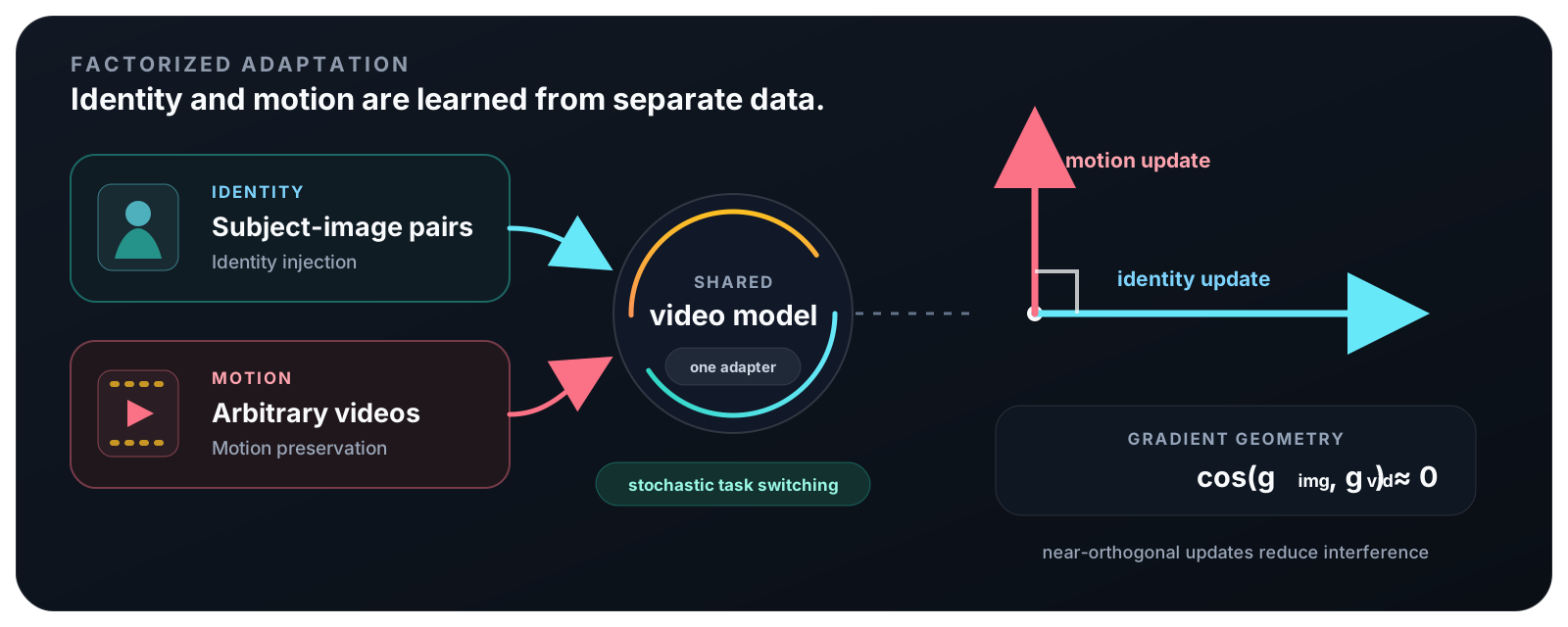
Paired views of the same subject teach appearance without requiring a customized video dataset.
Random reference frames and image-token dropout discourage first-frame copying and frozen outputs.
Identity and motion gradients approach zero cosine similarity while their norms remain non-negligible.
Results
Zero-shot generations for unseen reference images, without subject-specific fine-tuning.



Comparison
All methods use the reference image and prompt shown with each example.
“A musician wearing a Hawaiian shirt strums a ukulele on a boardwalk.”
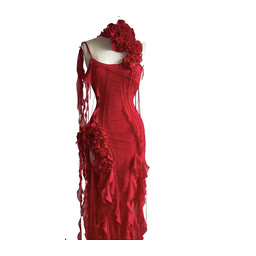
“The ruffled evening dress is worn by a model outside under a blue sky. The model walks slowly and turns to show its silhouette, detailed folds, and natural movement.”
“A young man wearing a green sleeveless top and red headphones appears as a content creator in a room illuminated with purple and blue neon lights.”
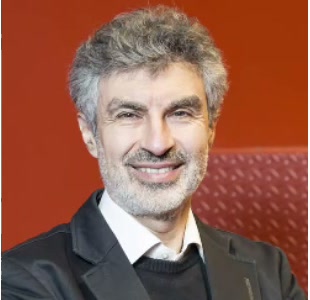
“A man gently clutches a bouquet of vibrant flowers and glances at the camera in a lush garden filled with colorful blooms.”
Citation
@inproceedings{kim2026learning,
  author    = {Kim, Daneul and Zhang, Jingxu and Jin, Wonjoon and Cho, Sunghyun and Dai, Qi and Park, Jaesik and Luo, Chong},
  title     = {Learning Zero-Shot Subject-Driven Video Generation Using 1% Compute},
  booktitle = {Proceedings of the European Conference on Computer Vision (ECCV)},
  year      = {2026}
}